

Bungalows
A wide variety built mainly between 1910 and 1935, many originally mail-order “kit” houses assembled from catalog plans, per the city’s designation materials.
Thinking about a move in Palm Beach County? Let’s talk about your goals. Get in touch
Neighborhood Guide · Lake Worth Beach, FL
Lake Worth Beach has six locally designated historic districts of early-20th-century cottages, bungalows and Mediterranean Revival homes — Old Town, Old Lucerne, Northeast Lucerne, Southeast Lucerne, South Palm Park and College Park — of which Old Town, Old Lucerne and College Park are also on the National Register of Historic Places.
Reviewed by · Last updated
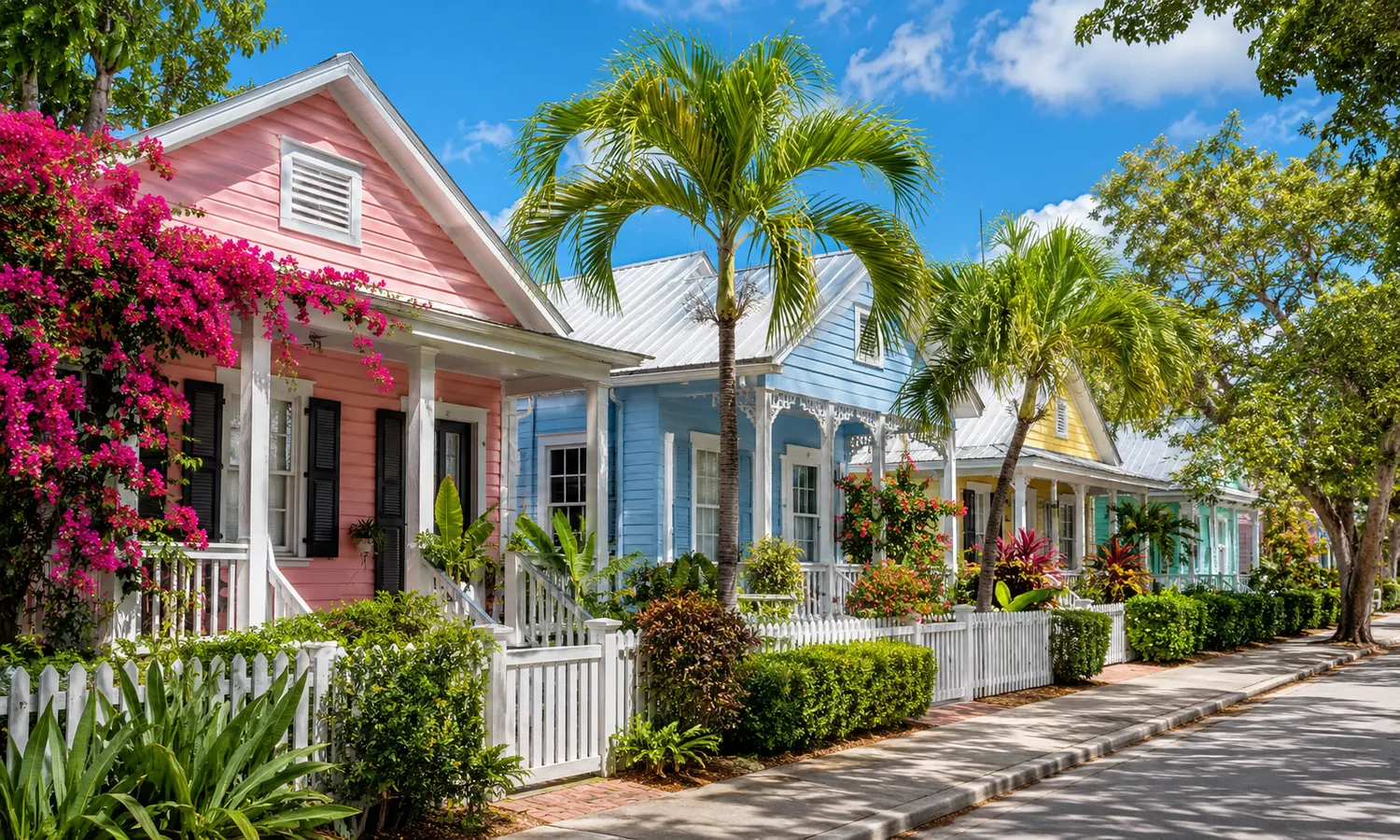
The historic districts are the defining feature of the mainland City of Lake Worth Beach — a city renamed from “Lake Worth” by a 2019 voter referendum. By the city’s own historic-preservation program, there are six locally designated historic districts: Old Town, Old Lucerne, Northeast Lucerne, Southeast Lucerne, South Palm Park and College Park. Three of the six — Old Town, Old Lucerne and College Park — are also listed on the National Register of Historic Places.
These districts sit inside the incorporated City of Lake Worth Beach, in ZIP code 33460, which is worth stating plainly: the broader “Lake Worth” mailing area (ZIP codes 33461 and up) covers a large amount of unincorporated county and other municipalities that are not the city. We confirmed the downtown/Old Town core against both the county’s municipal boundary layer and the Census Bureau’s incorporated-places layer.
What fills the districts is early-20th-century architecture. The city’s own materials describe Mediterranean Revival homes built roughly between the 1910s and 1930s, a wide variety of bungalows constructed mainly between 1910 and 1935 — many of them mail-order “kit” houses assembled from catalog plans — and streamlined Art Moderne buildings. The Old Town commercial core adds early-century commercial styles across a period of significance running from 1900 to 1949.
The practical thing to understand before buying in one of these districts is the review process. Homes in a Lake Worth Beach historic district are governed by the city’s historic preservation ordinance, and exterior changes require city approval before work begins — which shapes what an owner can and cannot do to a property’s exterior.
The historic districts cluster in and around the city’s downtown and near-north core, on the mainland along the Lake Worth Lagoon just south of West Palm Beach. They are all within the incorporated City of Lake Worth Beach, ZIP code 33460.
For the three districts also on the National Register, the National Park Service records boundaries: College Park is bounded roughly by Maryland Drive, North Federal Highway, 19th Avenue North and North Dixie Highway; Old Lucerne runs roughly along North Lakeside Drive, North Palmway and North O Street from Lake Avenue to 7th Avenue North; and the Historic Old Town Commercial District is bounded by the Florida East Coast Railway, M Street, Lucerne Avenue and 1st Avenue South.
For the three locally designated districts that are not on the National Register — Northeast Lucerne, Southeast Lucerne and South Palm Park — the city does not publish street boundaries in the materials reviewed, so this guide names them without drawing lines it cannot source.
We publish no drive times or distances, because none was measured from a dated authoritative source.
The housing in these districts is, by definition, historic: early-20th-century cottages, craftsman bungalows and Mediterranean Revival houses, in a mainland city renamed from Lake Worth to Lake Worth Beach in 2019. The city’s own designation materials describe the three dominant threads — Mediterranean Revival from roughly the 1910s to the 1930s, bungalows built mainly between 1910 and 1935 (a good number of them mail-order kit houses), and Art Moderne, with the Old Town commercial core spanning 1900 to 1949.
The single most important thing for a buyer to understand here is the historic-preservation review, because it directly affects what you can do to a property. Homes in a designated district are governed by the city’s historic preservation ordinance — adopted in the 1990s and revised in 2010 — and reviewed against Design Guidelines the city adopted in 2018. A seven-member Historic Resources Preservation Board administers the program.
Concretely, that means a Certificate of Appropriateness is required before exterior alterations, additions, new construction, relocation or demolition of a property in a district, and it must be obtained before a building permit is issued. That is a benefit and a constraint at once: it protects the character that draws people to these streets, and it adds a review step to exterior projects. There is an offsetting incentive — the city, with Palm Beach County, offers a 10-year ad valorem property-tax abatement for qualifying rehabilitation of contributing historic properties.
A note on the districts themselves: three (Old Town, Old Lucerne, College Park) carry both local and National Register status, while three (Northeast Lucerne, Southeast Lucerne, South Palm Park) are locally designated only. Because the local-district boundaries are not all published, whether a specific address is inside a district — and therefore subject to the review process — should be confirmed with the city rather than assumed from the neighborhood name.
On price, there is nothing authoritative to publish and we do not invent it. No dated, authoritative median sale price, price per square foot, days-on-market or inventory figure for the Lake Worth Beach historic districts exists on any source we checked. Value in a historic district turns on the specific district, the architectural style and integrity of the individual house, and its condition and any prior permitted work — so Christian works from property-specific comparables rather than an area-wide average.
A wide variety built mainly between 1910 and 1935, many originally mail-order “kit” houses assembled from catalog plans, per the city’s designation materials.
Houses built roughly between the 1910s and 1930s, drawing on Spanish, Italian and Moorish design elements.
Streamlined buildings with rounded corners, flat roofs and porthole windows, distinct from Art Deco.
The downtown Old Town commercial core, with early-century commercial architecture across a period of significance from 1900 to 1949.
Confirm with the city whether a specific address is inside a designated historic district before committing — three of the six districts are local-only and their boundaries are not all published, and district status determines whether the review process applies.
Budget time and design review into any exterior project: a Certificate of Appropriateness is required before exterior alterations, additions, new construction, relocation or demolition, and before a building permit issues, reviewed against the city’s 2018 Design Guidelines.
Ask about the 10-year ad valorem property-tax abatement the city and county offer for qualifying rehabilitation of contributing historic properties — it can offset the cost of a period-appropriate renovation.
Older homes reward diligence on roof, systems and prior work; verify that past renovations were permitted, and confirm flood zone, elevation and insurance for the specific address.
The historic districts are residential neighborhoods of early-20th-century homes within walking distance of the city’s downtown along Lake and Lucerne Avenues, its cultural venues, and — across the lagoon by bridge — the municipal beach. The Certificate of Appropriateness process is what keeps the districts’ architecture intact over time.
A School District of Palm Beach County school at 1700 Barton Road, Lake Worth Beach.
A School District of Palm Beach County school at 500 Highland Avenue, Lake Worth Beach.
A School District of Palm Beach County high school at 1701 Lake Worth Road, Lake Worth Beach.
A School District of Palm Beach County school at 824 North K Street, Lake Worth Beach.
A School District of Palm Beach County school at 716 South K Street, Lake Worth Beach. Listed via its federal directory record, as an official subdomain was not verified during research.
A Catholic school at 410 North M Street, Lake Worth Beach. Listed via its federal directory record.
School information is provided for reference only and can change. Attendance boundaries, grade levels, and admissions are set by each school and district — confirm details directly with the school. Nothing here is a rating or an endorsement.
No listings in Historic Districts right now
Authorized listings appear here as they come to market. Christian can also watch this area for you and send matches as soon as they surface.
Facts on this page are drawn from the following sources, accessed as of the date noted.
Let's talk
Schedule a private consultation, view available homes, or get neighborhood market updates as they're published. Christian follows up personally.

Hi, I’m Christian.
Looking to buy, sell, rent or relocate in Palm Beach County? Leave your phone or email and I’ll personally follow up.